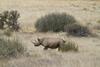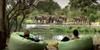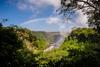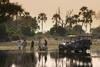


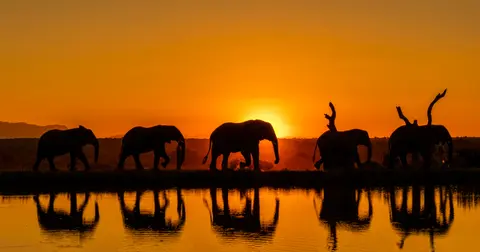
Image supplied by Jabulani herd elephants
Discover Africa's five best places to see elephants: Chobe, Amboseli, Sabi Sand, Hwange and Tarangire - plus how to help protect them

Your Timeless Journey Awaits...
Image supplied by Jabulani herd elephants
Discover Africa's five best places to see elephants: Chobe, Amboseli, Sabi Sand, Hwange and Tarangire - plus how to help protect them


Key Takeaways
Botswana’s Chobe National Park holds around 120,000 elephants, the densest concentration anywhere in Africa.
Kenya’s Amboseli National Park is home to over 1,000 elephants and has tracked individual families since 1972.
Sabi Sand borders the Greater Kruger National Park, so elephants move freely across a vast, unfenced landscape with exceptional Big Five density
Peak elephant viewing runs June to October, when dry conditions push herds toward water.
There’s a particular kind of quiet that happens when a herd of elephants crosses the road in front of your vehicle. Everyone stops talking. Even the guide, who has seen it a thousand times, leans forward. That’s the moment we want for you, and these are the places we’d send you to find it.

Angama Amboseli
Chobe National Park in Botswana
With roughly 120 000 elephants moving through the region, a sunset cruise along the Chobe River during the dry season puts you eye to eye with herds drinking, bathing and crossing the water, sometimes hundreds at a time. It is one of the great wildlife spectacles on the continent, and one boat ride is usually all it takes to understand why.

Chobe Chilewero
Amboseli National Park in Kenya. Snow-capped Kilimanjaro rising behind a herd of elephants is one of the most photographed scenes in Africa, and for good reason. Amboseli’s elephants have been studied since 1972 by the Amboseli Elephant Research Project, the longest-running study of wild elephants anywhere, so experienced guides can point out specific families by name, matriarch and history.
It’s also one of the last places on Earth to reliably see ‘big tuskers’-bulls whose tusks are so long and heavy that each can weigh over 100 pounds (45kg) and nearly reach the ground, a genetic trait Amboseli’s relative isolation has helped protect for generations.
Sabi Sand Game Reserve borders the Greater Kruger National Park in South Africa.
It’s one of the continent’s oldest and most respected private reserves, known for skilled, patient guiding and trackers who read the bush rather than search from a distance. Because the reserve is unfenced and shares an open boundary with the Greater Kruger, elephant herds range across a vast, connected landscape, and sightings here regularly include the rest of the Big Five in a single outing.

Londolozi safari
Hwange National Park in Zimbabwe
With no permanent rivers, Hwange relies on a network of pumped waterholes, and by the late dry season (August to October) more than 40 000 elephants pass through the park to drink.
Camps built directly overlooking these waterholes mean you can watch dozens of elephants arrive, drink and spar without leaving your seat, often well into the night under floodlight.

Linkwasha Camp along the Hwange River
Tarangire National Park in Tanzania
Between June and October, herds of up to 300 elephants converge on the Tarangire River, the only permanent water for miles, and lean into the park’s centuries-old baobabs to strip moisture-rich bark. It’s the largest elephant concentration in northern Tanzania, and the baobab studded scenery makes it one of the most photogenic sightings in East Africa too.

Oliver's Camp, Tarangire
If the big three aren’t wild enough for you, here are three curveballs worth knowing about.
Damaraland, Namibia
Home to one of the only desert-adapted elephant populations on Earth. These elephants trek up to 70 kilometres a day along dry riverbeds like the Hoanib and Huab, surviving on moisture pulled from roots and bulbs. Seeing an elephant against red desert dunes and no water in sight is unlike anything else on safari.
Mana Pools, Zimbabwe
Watch for Boswell’s crew, a group of bull elephants famous for rearing up on their hind legs to reach seed pods in the albida trees, a trick found nowhere else in the world. Some elephants here also swim across the Zambezi River, submerging almost entirely with just their trunks periscoping above the surface.
Odzala-Kokoua National Park, Republic of Congo
Deep in the Congo Basin rainforest, Odzala is one of the last strongholds of the African forest elephant, a smaller, straighter-tusked and critically endangered cousin of the savannah elephant. Sightings happen in bais, nutrient-rich forest clearings where elephants gather to drink and feed on mineral-rich mud, often alongside forest buffalo and, if you’re fortunate, western lowland gorillas.

Damaraland desert-adapted elephant

Mana Pools elephant
| Park | Best months | What to expect |
| Chobe, Botswana | June to October | Largest riverside gatherings, boat safaris |
| Amboseli, Kenya | June to Oct, Jan to Feb | Big herds, clear Kilimanjaro views |
| Sabi Sand, South Africa | May to October (dry season) | Expert tracking, strong Big Five sightings |
| Hwange, Zimbabwe | Aug to Oct (late dry) | Waterhole action, elephants in their hundreds |
| Tarangire, Tanzania | June to October | Herds up to 300, baobab country |

Every park in this guide depends on conservation work that happens off camera — anti-poaching patrols, orphan rehabilitation, human-elephant conflict mitigation, research collaring. If you’d like to support that work directly, here are some of the organisations doing it, several of them in the very places above.
A: Chobe National Park in Botswana, with an estimated 120,000 elephants, the highest concentration on the continent.
A: Sabi Sand is a private reserve that shares an unfenced boundary with the Greater Kruger National Park, so elephant herds move freely across a much larger landscape. Combined with experienced guiding and tracking, this makes for consistent, unhurried Big Five sightings.
A: Amboseli National Park in Kenya and the neighbouring Tsavo Conservation Area are the last reliable strongholds for big tuskers — elephants whose tusks are so large that each can weigh over 100 pounds (45kg). Organisations including the Amboseli Elephant Research Project, Big Life Foundation and Tsavo Trust have helped protect this population for decades.
A: Generally, June to October, when the dry season concentrates herds around rivers and waterholes.
Read our travel stories for inspiration and updates.